
Vol 48, Issue 3, Q4
In short
- The insurer response to disaster depends on the type of cover involved and the integration with local relief efforts.
- Parametric insurance is emerging as an efficient and cost-effective option in the face of rising climate change-related events.
- Frontline teams can prepare with, and learn a lot from, local authorities.
It's in the most challenging times during natural catastrophes and disaster you could argue that the proverbial rubber hits the road for insurers.
Their immediate responsibilities depend on the form of cover in place and their designated role in the frontline response, which is typically led by the local authorities.
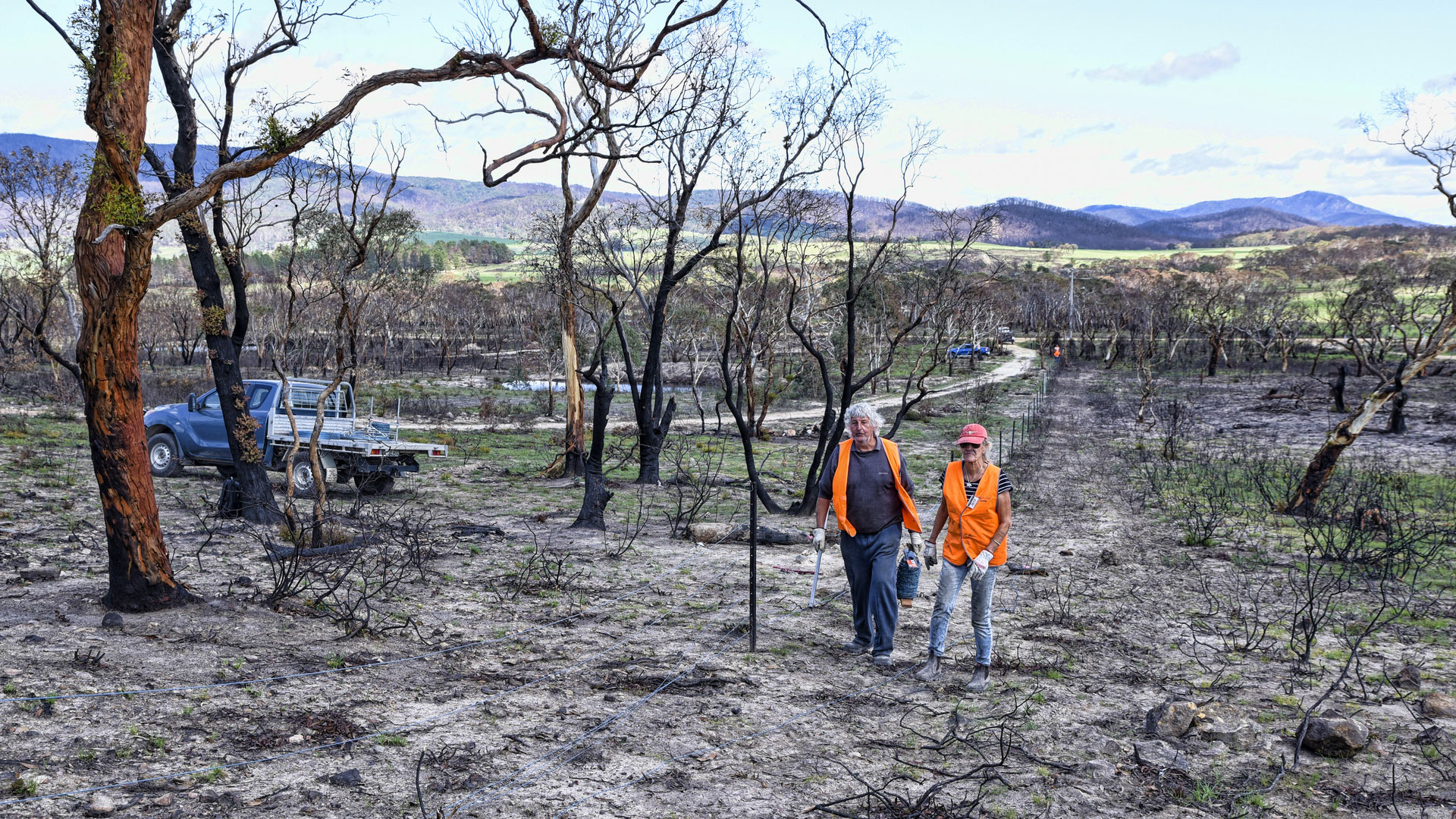
From the devastating 7.7 magnitude earthquake in Myanmar to floods from Cyclone Alfred in Australia and wildfires in South Korea, 2025 served up its fair share of natural disasters.
During recent Victorian bushfire events, insurers implemented response measures designed to meet their General Insurance Code of Practice obligations to support customers experiencing vulnerability.
Claims pathways were simplified, early claims payments were made available and customers requiring temporary accommodation were prioritised to help stabilise households displaced by evacuation orders.
Financial hardship support was activated, including premium flexibility, excess waivers and tailored payment arrangements for customers facing sudden income disruption.
In line with Code requirements to provide additional assistance where vulnerability is identified, insurers worked through local brokers and community hubs to reach older customers, regional policyholders and those without reliable digital access.
Clear, coordinated public communication through the Insurance Council of Australia helped ensure affected communities understood what support was available, how claims could be lodged and where further assistance could be accessed during the early stages of recovery.
Meanwhile, major flood events across eastern Australia saw insurers adapting to reflect prolonged access challenges and extended recovery timeframes.
Payment deferrals, premium flexibility and hardship arrangements were used to ensure customers were treated fairly while homes remained uninhabitable or repairs were delayed.
To manage high claim volumes, insurers expanded the use of online, email and SMS-based claims lodgement, while also deploying on-the-ground teams and working from local broker offices once conditions allowed.
Clearer explanations of the claims process, more regular status updates and improved communication about third-party providers supported Code obligations around transparency and informed decision-making.
These events have reinforced the importance of preparedness, surge capacity and clear communication, particularly in supporting customers through complex, long-term recoveries.
Parametric insurance
In South-East Asia, firms such as climate insurtech company IBISA, Munich Re, Swiss Re and Aon offer parametric insurance products, primarily for low-income consumers and businesses.
For example, Munich Re protected more than 3,000 small-to-medium enterprises after the 2022 Cianjur earthquake in Indonesia.
In a recent opinion piece, Elizabeth Henderson, global head of climate at Aon, says: “Traditional insurance models can be too slow and complicated for the fast-moving nature of climate disasters.
In regions where resources are limited, waiting weeks or months for payouts can mean the difference between a swift recovery or a long-term crisis.
This is where parametric insurance offers the opportunity for a transformational shift.”
Given the extended relief efforts and difficulty accessing regions impacted by a natural disaster, parametric insurance offers three advantages in the immediate aftermath of an event:
1. Transparency: insurers, councils and the public can access the same information related to the triggers of the policy, such as weather reports and news reports.
2. Faster, simpler claims settlement: insurers don’t have to assess the losses, so customers receive their claims payments quicker, and it’s faster and more cost-effective for insurers too.
3. Flexibility: the policyholder can choose how best to use their insurance payout. Says Henderson: “We can’t meet today’s climate risks with yesterday’s tools.
As weather-related disasters grow in frequency and intensity, the imperative is clear: we must shift from reactive recovery to proactive resilience.
That means investing in innovative risk-transfer models, expanding access to financial protection and strengthening infrastructure before disaster strikes.”
Individuals are not the only ones to benefit from parametric cover in the aftermath of an event.
Southeast Asia Disaster Risk Insurance Facility
The Southeast Asia Disaster Risk Insurance Facility - SEADRIF - is a regional platform established by ASEAN+3 countries (South-East Asian nations plus China, Japan and the Republic of Korea), with financial support from the governments of Japan and Singapore.
The World Bank is its lead technical partner. SEADRIF’s mission is to strengthen the financial resilience of governments and people in the ASEAN region to climate and disaster shocks through financial and insurance products and services, as well as advisory and technical assistance. Its services include:
- parametric insurance products: to provide fast, predictable payouts following disasters
- regional capacity building: to foster the development of sustainable, well-executed financial protection strategies
- public assets financial protection: to support recovery, rehabilitation and reconstruction.
In response to Super Typhoon Yagi in September 2024, the SEADRIF Insurance Company paid US$3 million to Lao PDR through its parametric flood risk insurance, which has been in place since 2021 and was renewed in February 2024.
The funds were disbursed within four to six days of exceeding the trigger thresholds. The Lao Government then used the funds to support relief efforts, including emergency goods and services, damage control and restoration of essential services, following SEADRIF’s Environmental and Social Management System.
Insurers as intermediaries
In cases where insurers are acting as agents for government-provided natural disaster cover, they have a critical role to play in working with councils and first responders to assess losses and facilitate both the public and private insurance claims.
In New Zealand, for example, nine insurers representing 20 brands have partnered with the Natural Hazards Commission Toka Tū Ake (NHC).
The private insurer that collects the premiums for the government-funded cover acts as a single point of contact for claims and repairs for customers impacted by a natural disaster.
As QBE’s Declan Moore commented when the insurer joined the program:
“The Natural Disaster Response Model is a customer-focused solution that reduces complexity at a stressful time and ensures claims are processed fairly and as efficiently as possible.”
In 2023, the Auckland Anniversary Weekend floods and Cyclone Gabrielle occurred within three weeks of each other.
The National Emergency Management Agency headed up the initial storm preparation and response, with the help of Fire and Emergency New Zealand and many other smaller rescue groups.
Access to affected areas was limited by floodwater, road damage and landslips - even for vehicles capable of navigating rough terrain.
Many insurers struggled with the volume of calls and staff were quickly redeployed to help.
Using email and SMS helped them redirect many customers to online platforms to lodge their claims.
Once it was safe to do so, insurers set up in-community hubs or worked in local brokers’ offices, so they were able to provide real-time status updates.
“It is clear that the sector rose to meet an overwhelming challenge using learnings from the [Christchurch] earthquakes and has done further work to improve,” commented the New Zealand Financial Markets Authority (FMA) head of insurance, Jane Brown.
The FMA has commended the work of insurers during the two flood events but notes in a July 2025 review there is room for improvement to address consumer complaints about delays and the insurance claim experience as a whole.
“The next significant insurance event is a matter of ‘when’, rather than ‘if’. It is important that insurers take the time to review and tailor their claims processes to ensure that consumers’ expectations and needs are being met,” said Brown.
The FMA recommends that insurers:
1. Give customers clearer information about the claim process and what the customer needs to do or provide.
2. Supply more information about what their NHC insurance covers.
3. Make it clear what third parties such as loss adjusters and builders will be doing, and ensure these providers communicate the same information to customers.
4. Provide better and more regular status updates on claims and repairs, plus contact details for any contractors involved. 5. Explain that customers who receive a cash settlement may still be able to claim other amounts.
Joining forces when disaster strikes
Being on the front line requires insurers to hit the ground running. And that means preparing their teams in advance and consulting with local authorities.
For Malaysian insurer Etiqa, disaster response preparation includes live exercises, says Dr Dimitri Terryn, chief risk officer for parent company Maybank Ageas Holdings Berhad.
“We have our playbooks and our policies, but we also do crisis simulation exercises. We involve local government authorities, and maybe you pick up certain things that you hadn’t thought of.”
Post-event, it’s vital for insurers to clearly articulate how policyholders can lodge claims and have them assessed.
“We can mobilise fairly quickly,” says Dr Terryn. “After the Putra Heights gas pipeline explosion [in Selangor, Malaysia] in April 2025, Etiqa was the first insurance and takaful company to assure customers it would provide cover to eligible customers.
“We try to be quick and pragmatic. For Putra Heights, we set up a claims booth at the temporary evacuation centre. Our on-the-ground teams provided support, including cash allowances, on-the-spot claims approval and free and independent safety inspections.”
Recovery and resilience
Ultimately, the insurance industry’s goal is to protect homes, families and human lives.
This starts with working with governments, councils and individuals to understand the risks and plan for disaster.
Then, when an event occurs, insurers work with those same authorities to help the individuals impacted get back on their feet as quickly as possible.
But, as director of the NHC Zoe Morley says, “While insurance is a crucial element for recovering from natural hazard events, it cannot alleviate all the impacts of hazards on individuals, whānau [extended families], communities and society. “Community resilience is a priority.”
Writer’s insight
“It’s fascinating how insurers are there to provide support at many different levels after an insurance event — from working with local authorities and individuals on the ground, through to parametric funding at government level to help with the relief efforts.”

Comments
Remove Comment
Are you sure you want to delete your comment?
This cannot be undone.