
In How Risky is it, Really? (McGraw-Hill, 2010), former Harvard instructor David Ropeik points out that our fears don’t always match the facts.
He observes: “Sometimes we’re more afraid of what the scientific evidence suggests are relatively small risks, but quite often, we aren’t afraid enough of the risks that the evidence suggests we should worry about more.”
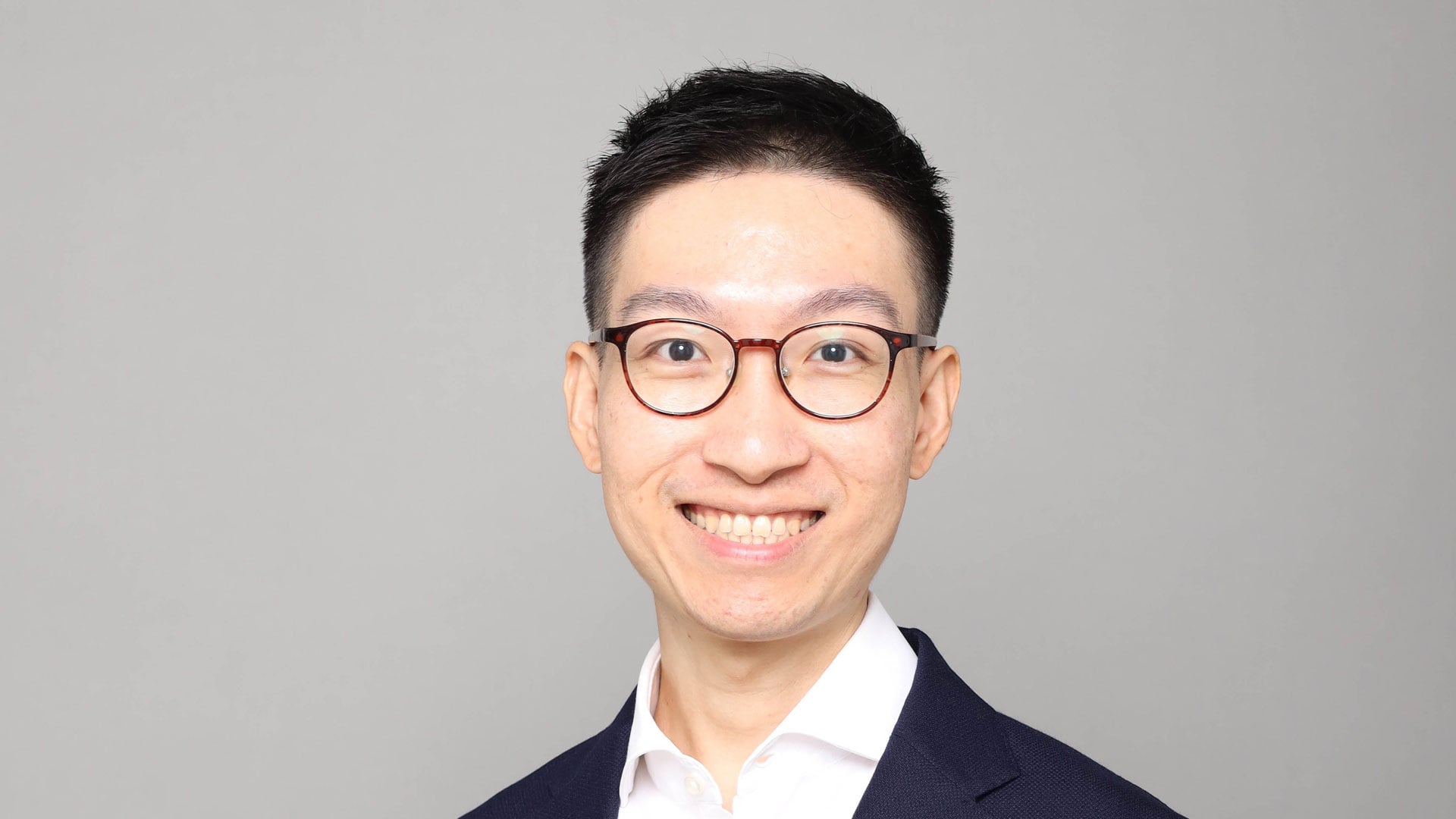
It’s this subjective view of risk that first intrigued Weihao Choo.
“I have always been fascinated with how people perceive risks differently,” he says, “and how this perception influences behaviours which, of course, include the purchase of (re)insurance.”
In the face of risk, some people catastrophise, some deny and others attempt to quantify. Choo falls into this last group, saying: “In high school, I took on a liking for statistics, which is one of the technical pillars of (re)insurance.”
This led the Singaporean to actuarial science — the practice of using statistics and maths to assess and manage risk.
A start in actuarial studies
Perhaps it’s ironic, then, that Choo’s interest in statistics presented him with an opportunity that many might have considered rather risky; the chance to study overseas.
“After completing high school, I was offered a scholarship at Macquarie University in Sydney, which had one of the best actuarial programs globally,” he explains.
“Coincidentally, my dad also studied in Sydney decades ago on a scholarship. I happily accepted the offer. This was one of my best decisions so far and now I consider Australia to be my second home.”
On his return to Singapore, Choo completed his two years’ compulsory national service with the Singapore Army, serving as a combat medic.
Over the six years that followed, he took various roles at MSIG Asia in Singapore and then EY in Australia, putting his actuarial expertise to work and developing his leadership skills, before joining Munich Re in Singapore as head of enterprise risk management APAC/MEA in 2017.
Moving to Australia and back again, and now as a fully qualified actuary, gave Choo something every good risk analyst needs: more information, more experience and more perspectives.
“Working in two countries gave me the benefit of seeing diverse markets, work practices and cultures,” he says. “I would highly encourage everyone to spend time in a different country if they have the opportunity to do so.”
Once in place at Munich Re, stints as APAC head of global consulting and head of insurance consulting and digital solutions followed, and Choo was named chief risk officer APAC/MEA in March 2025.
Putting theory into practice
Leading a team of risk managers, Choo is tasked with advising business units across Asia Pacific, the Middle East and Africa, and coming up with practical, innovative solutions to their challenges.
“Risk and risk management are natural concepts which everyone understands at birth,” says Choo. “However, our instincts, which have developed over millions of years, sometimes deceive us when assessing actual risks in the modern world.”
Insurance professionals add value by bringing clarity and insurance solutions to the table. “Clarity comes in the form of technically appropriate insurance pricing and coverages,” Choo observes.
"These give an important signal about the probability of a certain risk and the extent of the possible loss, for example, when building in a region where parts of it might be prone to flooding or bushfires.”
Living in interesting times
Cyber incidents, business interruption and natural catastrophes are the top three risks keeping business leaders around the globe awake at night.
However, myriad other threats, from climate change and new technologies to political risks and legislative changes, make the top 10.
Says Choo: “The world is going through a period where we observe simultaneous changes and trends happening in geopolitics, climate, technology and AI, and societal attitudes. This simultaneity is unprecedented and uncomfortable for many businesses.”
In this complex, sometimes chaotic risk environment, there’s great value in leaders who can keep a cool head, ignore the noise and give businesses and communities advice they can act on with confidence.
“These days,” says Choo, “I am a strong believer that insurance can support communities, businesses and governments in particular with macro topics such as climate change.”
Five in five, with Weihao Choo
1. What’s your top productivity hack? In the past, productivity meant doing things fast and accurately. These days, it’s about making the right decisions, and my productivity hack is to do things slow, i.e. think before acting.
2. What’s the most underrated leadership skill? Doing what really matters, which can sometimes mean being less visible in the short term or letting others shine. It is always tempting to make decisions which have short-term or superficial impact.
3. If you weren’t in insurance, what would you be doing? Probably a combination of engineering and architecture. Statistics also play a major role in these areas.
4. What’s the best piece of advice you’ve ever received? Set high standards for yourself. Everything else follows from that.
5. Tell us something you want to learn more about this year. Postnatal care and diaper changing, since we are very much looking forward to becoming parents again this year. In working life, I want to learn more about using generative AI, beyond ChatGPT.

Comments
Remove Comment
Are you sure you want to delete your comment?
This cannot be undone.